PRESSURE PROTECTION
Nitrogen over-pressure protection skids (OPPS)
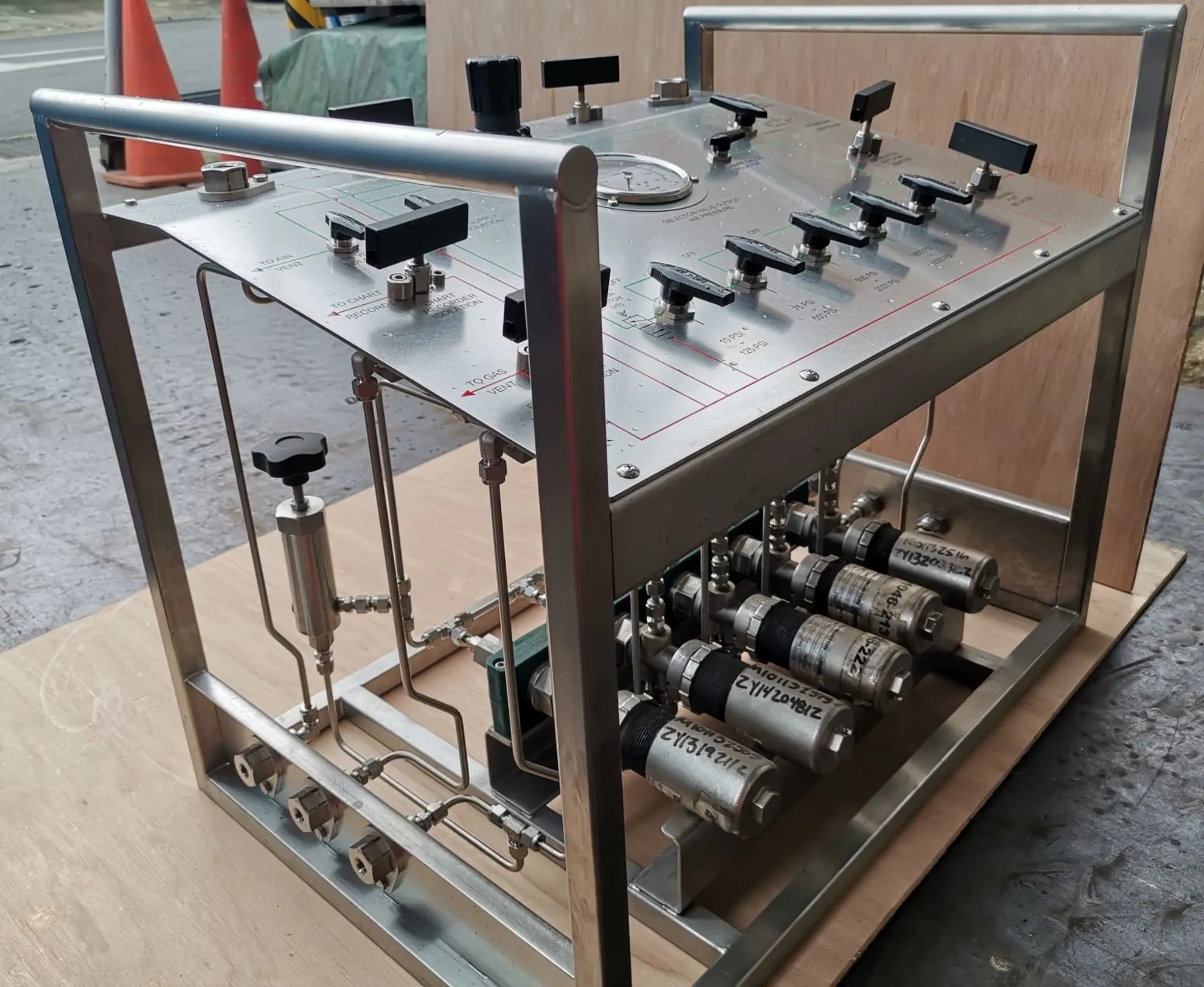
Fully pneumatic over-pressure protection for nitrogen pumps up to 15,000 psi. When pressure reaches the set point, the OPPS bleeds off the control air supply, stopping the nitrogen pump and the engine together. Built in SS316 at our workshop in Singapore.
Explore the system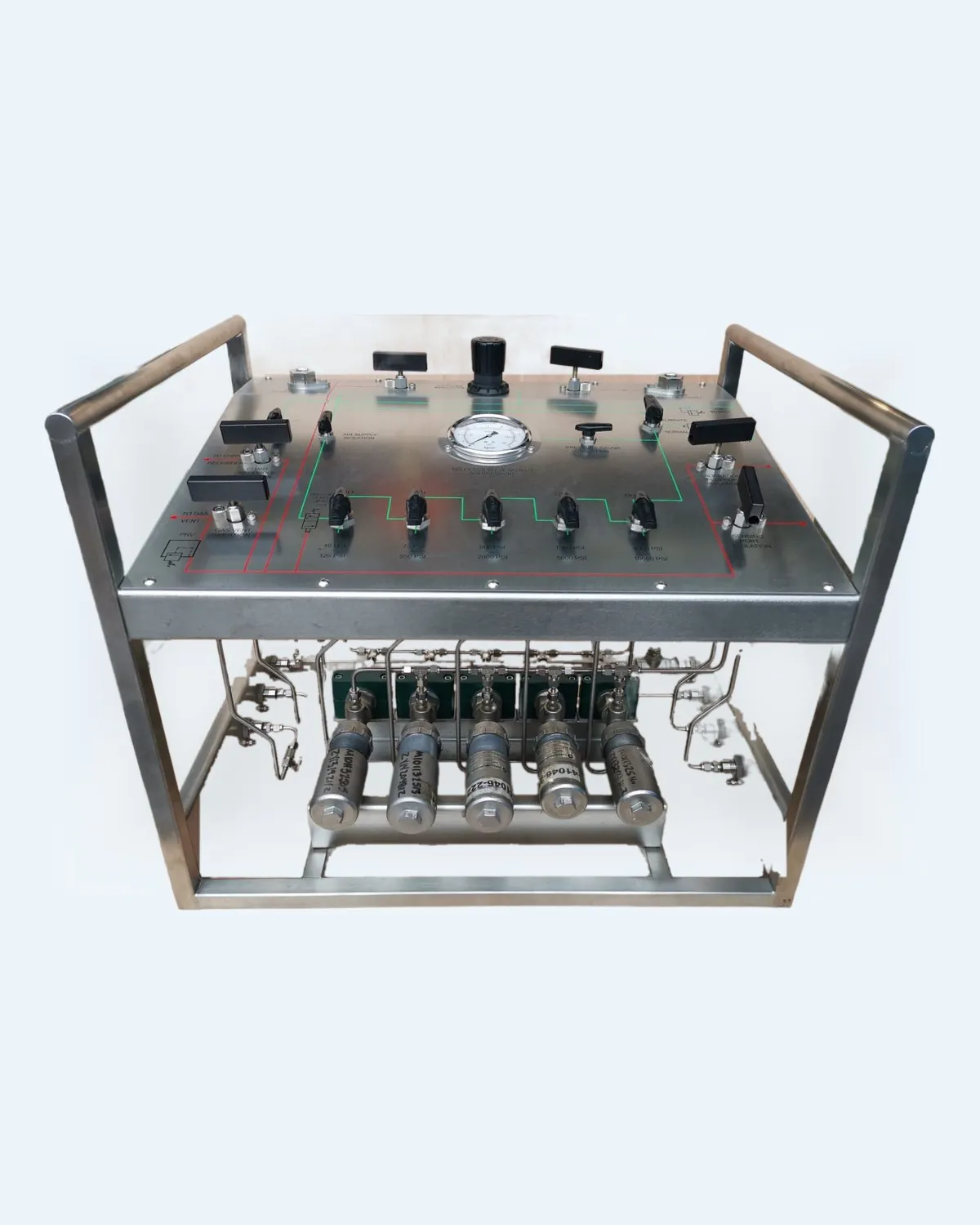
THE APPLICATION
Stop the pump before pressure exceeds the limit
Nitrogen pumps can build pressure beyond what downstream equipment, hoses or test pieces are rated for. An OPPS acts like a relief valve for the pump: it watches discharge pressure and shuts the pump down at a set point, so pressure stops rising.
PS Technology builds OPPS skids as standalone units or supplied together with a diesel-driven nitrogen skid. Sensing uses pneumatic pressure pilots, typically Axelson, with an adjustable set point and manual reset.
Is a pressure regulator by itself an OPPS?
Not necessarily. The required protection depends on the design basis and how the system must respond to abnormal conditions. That philosophy should be agreed before selecting devices.
HOW IT WORKS
How an OPPS works
- The diesel-driven nitrogen unit's pneumatic control air line, which supplies both the engine throttle and the nitrogen pump, is routed through the OPPS.
- A pneumatic pressure pilot senses the nitrogen discharge pressure.
- When pressure reaches the set point, the pilot trips and the OPPS bleeds off the control air.
- With the air gone, the nitrogen pump stops and the engine throttle drops at the same time.
- The system stays tripped until an operator manually resets it.
SYSTEM
What's on a typical OPPS
- Pneumatic pressure pilots, typically Axelson, with adjustable trip set point
- Protection up to 15,000 psi
- Bleeds off control air to stop the nitrogen pump and engine together
- For diesel-driven nitrogen pump units
- Manual reset after a trip
- Fully pneumatic, with no electrical components
- SS316 stainless steel frame
- Built with our in-house Metalclave high-pressure fittings
- Standalone, or supplied together with a diesel-driven nitrogen skid
Oil and gas equipment supplied to companies including TechnipFMC, Halliburton, Baker Hughes, SLB and Exlog.
Inputs for a protection brief
- Pressure limits
Record maximum source pressure and the allowable limits of protected equipment.
- Operating modes
Describe normal supply, start-up, isolation and credible pressure-upset conditions.
- Project basis
Provide required protection philosophy, applicable standards and testing or documentation needs.
FAQ
Frequently asked questions
What is a nitrogen OPPS?
An over-pressure protection system that shuts down a nitrogen pump when discharge pressure reaches a set point, protecting downstream equipment, hoses and test pieces.
How is an OPPS different from a relief valve?
A relief valve vents excess pressure. An OPPS stops the pump at the source, so pressure stops rising. Many systems use both.
How does the OPPS stop the pump?
It bleeds off the pneumatic control air supply. On diesel-driven nitrogen units, that air feeds both the engine throttle and the nitrogen pump, so both stop together.
Does the OPPS need electrical power?
No. It is fully pneumatic, with no electrical components.
What pressure can it protect?
Up to 15,000 psi, with an adjustable trip set point and manual reset.
Can the OPPS be supplied with a nitrogen skid?
Yes. We supply OPPS skids as standalone units or together with a diesel-driven nitrogen skid.
GALLERY
Recent builds
Built, calibrated and tested at our Singapore workshop.